
Staff Attendance and Working-Time Tracking with Time Attendance Systems
Staff tracking software that calculates shifts and working hours; card terminals as well as fingerprint and face recognition devices. One point of contact from site survey to commissioning, and from software to periodic maintenance.
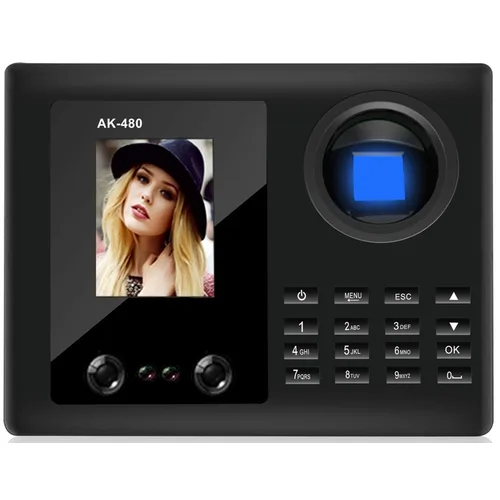
Fingerprint Time Attendance System
A multi-mode time attendance and door terminal that works with fingerprint, card and PIN.
Details and survey request →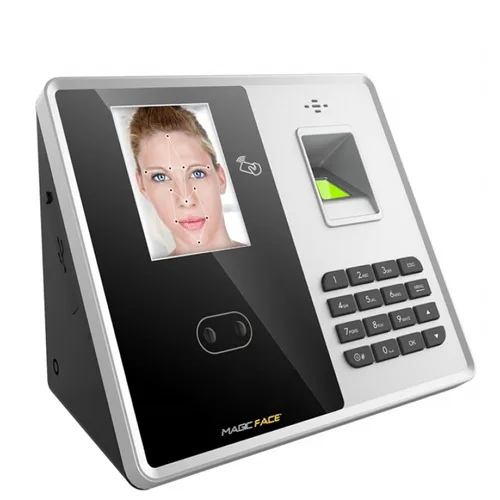
Face Recognition Systems
Door, turnstile and attendance control with fast, contactless verification.
Details and survey request →
Card-Based Attendance and Access
Fast, low-cost staff logging with proximity and encrypted cards.
Details and survey request →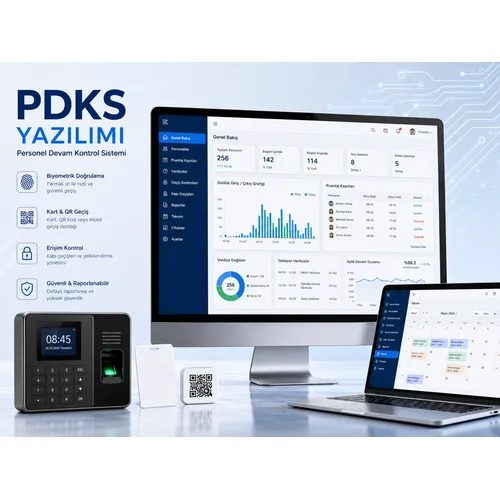
Time Attendance Software
Time attendance software that automatically calculates shifts, leave, working hours and absences.
Details and survey request →What Does PDKS Mean?
PDKS is the Turkish acronym for Personel Devam Kontrol Sistemi, i.e. a staff time attendance system. A PDKS system records employees' arrival and departure times with a time attendance device and turns this data into reports on working hours, overtime, late arrivals, absences and leave through time attendance software. In everyday usage it is also called a staff tracking system or attendance control system.
Sign-in sheets and manually filled timesheets waste time and invite errors. A time attendance system collects records automatically, easing the workload on HR and accounting before each payroll period.
From Clock-In to Report: How the System Works
- The employee holds their card to the terminal at the entrance or enters a PIN code.
- The terminal identifies the person and records the event with date and time; if connected to a turnstile or door lock, it releases the passage.
- Records reach the software over the network or via data transfer from the device.
- The software produces daily and monthly calculations based on the defined shift and working rules.
- Managers review the reports and export them to the payroll software when needed.
The attendance tracking software built by Sensör Software's own development team is designed to manage shift plans, overtime and leave under one roof with different terminal types. You can see the software's screens and modules on our staff tracking software page.
Terminal Options
Card-based attendance (RFID/NFC): our recommended approach for working-time tracking
RFID/NFC-based terminals that work with proximity (125 kHz) or encrypted (13.56 MHz) cards. Reading is fast, installation is straightforward, and since no biometric data is processed, this is our first recommendation for working-time tracking. The risk of a card being handed to someone else can be reduced by choosing encrypted cards, asking for a PIN together with the card and supporting passages with cameras. Details: card reader attendance tracking.
PIN terminals
These work via a keypad and involve no card costs. They can be used alone or as an additional verification step alongside a card; they suit small teams and workplaces where carrying cards is inconvenient.
Biometric terminals (fingerprint, face recognition)
These require the employee to be physically present at the device. However, the Turkish Personal Data Protection Authority (KVKK) principle decision No. 2026/921 of 29.04.2026 does not consider processing such data for tracking working hours to be proportionate (see the legal status section for details). If you want to use the same devices, for example, at the door of a critical room, this is a matter that requires separate legal review. For product information, see our fingerprint terminals and face recognition solutions pages.
Comparison of Time Attendance Devices
| Feature | Card (RFID/NFC) | PIN | Biometric (fingerprint / face) |
|---|---|---|---|
| Suitability for working-time tracking | Recommended method | Recommended method | Not recommended due to principle decision No. 2026/921 |
| Personal data aspect | No biometric data processed | No biometric data processed | Special category biometric data is processed |
| Buddy punching risk | Yes; can be reduced with card + PIN | Risk of PIN sharing | Low |
| Additional cost items | Cards and card replacement | Negligible | Negligible |
| Suitability for harsh environments | High | High | Depends on environment and lighting |
Which Reports Does Management See?
A well-configured time attendance program does more than list clock-in and clock-out times; it turns raw records into information managers can act on. The most frequently used reports are: daily attendance sheets, lists of late arrivals and early departures, overtime totals, employees who forgot to clock in, working hours by shift, and annual and excused leave balances. Reports that can be filtered by department, branch or shift make it easy to spot problems quickly. Exporting outputs in a format the payroll software can read reduces manual data entry in accounting and the errors that come with it. A workflow in which missed clock-ins are corrected with manager approval also keeps records reliable.
Is Using a Time Attendance System Legal?
Recording working hours is standard practice for businesses; however, since a time attendance system processes personal data, obligations under KVKK (the Turkish Personal Data Protection Law) apply. The law classifies fingerprints and facial geometry as special categories of personal data. In its Turkish Personal Data Protection Authority (KVKK) principle decision No. 2026/921 of 29.04.2026, the Board found the processing of biometric data for working-time tracking contrary to the principle of proportionality, and stressed that, given the relationship of dependency between employer and employee, explicit consent cannot be regarded as freely given. The Board recommends less intrusive methods such as encrypted cards, PINs, RFID/NFC cards or signatures.
For this reason, we recommend card reader (RFID/NFC) or PIN keypad terminals to businesses that want to track employee attendance. The decision concerns working-time tracking; using fingerprint or face readers for access control, for example at the door of a data room, is a separate matter that requires its own legal analysis. We recommend obtaining your legal advisor's opinion on the practice specific to your business.
Questions for Choosing the Right Time Attendance System
- How many employees and branches do you have: a single address or a multi-branch structure linked to headquarters?
- What is your shift plan: fixed hours, rotating shifts, night work?
- What is the working environment like: conditions such as dust, oil, glove use or outdoor areas affect the choice of reader and housing.
- KVKK compliance: working hours should be tracked by card or PIN, and biometric methods should be avoided.
- Do you need access control: will the terminal only keep records, or will it also control turnstile lanes or doors?
- Reporting expectations: payroll export, leave management and manager approval steps.
- Data protection: who can see what, how backups are taken and logging of who accesses the system.
Factors That Determine Time Attendance System Prices
- Number and type of terminals (card, PIN, card + PIN)
- Number of employees and scope of the software
- Number of branches and the need for central reporting
- Connection to turnstiles, door locks or barriers
- Cabling, network infrastructure and installation conditions
- Installation, training and the support expected afterwards
Installation Process
During the site survey, entry points, employee flow and network infrastructure are assessed, and terminal locations are decided. The devices are mounted and added to the local network; after the software is installed, shifts and working-time rules are defined. Employees receive their cards and, if needed, are assigned PIN codes. The first month's reports are reviewed together with you and the rules are fine-tuned. For businesses outside Istanbul, we ship devices to all 81 provinces and plan installation according to the project.
Maintenance and Support After Installation
Reader surfaces need to be wiped at regular intervals. In addition, lost cards should be cancelled without delay, the software database should be backed up, and the records of employees who have left should be deleted. We provide technical service support for device or software issues. When comparing time attendance providers, we recommend weighing software support and field service capability together. For pricing, use the quote form or reach us on WhatsApp.
Systems often used alongside
Frequently asked questions about time attendance (PDKS)
How does an employee whose fingerprint can't be read clock in?
They use a card or PIN; these records are fully reflected in the software's reports as well.
Are records lost if the connection drops?
No. The data is stored in the device's memory and transferred to the software once the connection is restored.
What should we look out for regarding KVKK?
The Turkish Personal Data Protection Authority (KVKK) principle decision No. 2026/921 of 29.04.2026 does not consider processing biometric data for working-time tracking proportionate; obtaining the employee's explicit consent does not make it lawful either. For working-time records, you can use the device's card or PIN mode. For other purposes, we recommend seeking a legal expert's opinion.
Is it legal to use a fingerprint reader?
Under KVKK, fingerprints are special category personal data. According to the Turkish Personal Data Protection Authority (KVKK) principle decision No. 2026/921 of 29.04.2026, processing biometric data for working-time tracking is not considered proportionate; for this purpose, running the terminal in card, QR or PIN mode is recommended. Using biometrics for other purposes requires a separate legal assessment; we recommend consulting a legal expert for advice specific to your business.
Request a quote for your project
Send us the number of doors/gates, your headcount and your address, and we'll call you to arrange a site survey and quote.
Our guides on this topic
Staff Tracking with QR Codes
We explain how entry and exit logging works with a dynamic QR code on a phone instead of a card, along with visitor invitations, benefits and risks, and offer a roadmap for moving from cards to QR.
Read →Mobile Time Attendance Guide
Using a technical service team as an example, we explain how to set up phone-based attendance for field and branch staff who can't reach a terminal, the verification layers involved and proportionate use of location data.
Read →Canteen Turnstile Guide
From an operator's perspective, we look at how a turnstile at the canteen door verifies meal entitlement, blocks a second pass in the same meal period and simplifies month-end reconciliation with the caterer.
Read →What Is a Timesheet and How Is It Prepared?
We explain what a timesheet contains and how it differs from payroll, how attendance records become a timesheet in five stages, the challenges of shift work and what to watch for when calculating overtime.
Read →2026 Time Attendance Cost Guide
From a business owner's perspective, we cover the hardware, software, labour and support items that make up a time attendance project budget, and show how to compare quotes fairly.
Read →The Legal Status of Time Attendance Systems
From an employer's perspective, we cover the legislation behind time attendance systems, the responsibilities arising from KVKK and the practices that keep records reliable.
Read →