
Access Control Systems and Door Lock Solutions
Access control systems that assign permissions per door, plus magnetic and card-operated locks. One point of contact from site survey to commissioning, and from software to periodic maintenance.
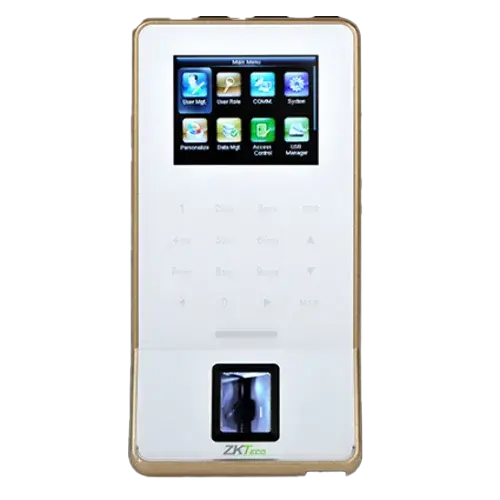
Access Control Systems
Card and biometric door control with time schedules and per-door permissions.
Details and site survey request →
Lock Systems
Secure doors with magnetic, electric and card-operated locks.
Details and site survey request →
Hotel Door Locks and Smart Locks
Card-operated and smart door locks for hotels, serviced apartments and dormitories.
Details and site survey request →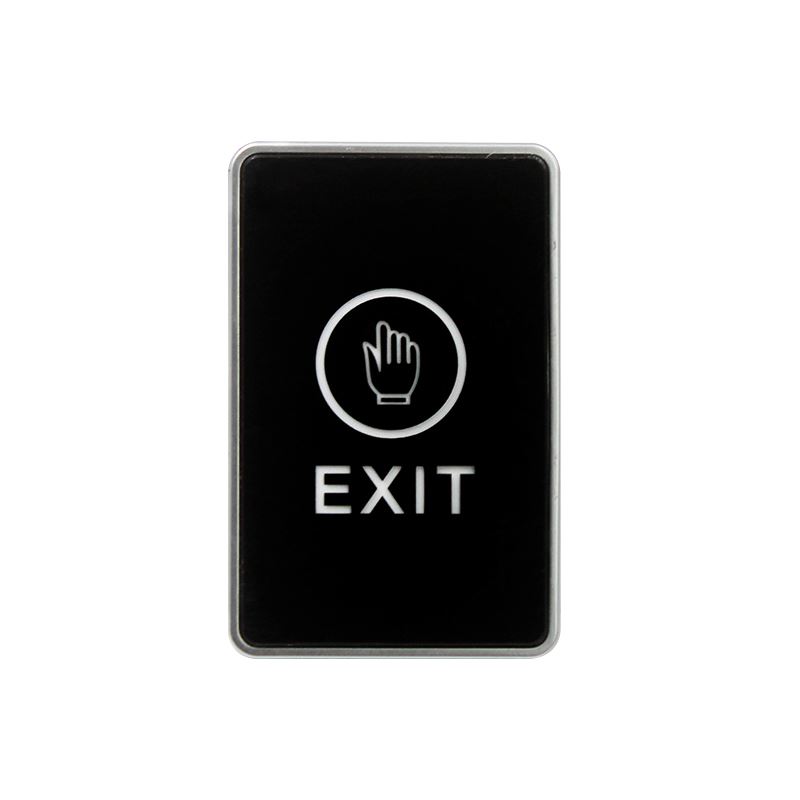
Door Release and Exit Buttons
Touch, touchless, stainless steel and emergency exit door buttons.
Details and site survey request →
QR Code Access System
Card + QR code readers for event and visitor entrances.
Details and site survey request →What Problems Do Access Control Systems Solve?
Access control systems are security solutions that define which person can use which door in a building, on which days and during which hours, and record every passage. Internationally they are known as access control. The difference from keyed locks is this: a lost card is cancelled in a single step in the software with no need to change the lock, and it is easy to allow an employee into their own department only, and only at certain hours.
The Four Main Parts of the System
Every access control installation is built on four basic components:
- Identification device (reader): Reads the card, PIN, fingerprint, face or QR code.
- Access control panel: Compares the information from the reader against the permission list and decides whether to open the lock. On some devices, the panel and reader are combined in a single housing.
- Physical barrier: A magnetic or electric strike lock on the door, turnstile lanes at pedestrian entrances, and a barrier at vehicle entrances.
- Access control software: The hub where users, permissions, time schedules and reports are managed.
When a person verifies their identity, the panel keeps the lock open for the set time, while the door sensor monitors whether the door has been left open or forced. A request-to-exit button or a second reader is used when leaving from the inside.
Types of Access Control Systems by Authentication Method
Card access control systems
Working when the user presents their card, with proximity (125 kHz) or encrypted (13.56 MHz) cards, these systems are the most common and easiest-to-use option. Access cards can be combined with the staff ID card into a single card. Details: card reader access solutions.
PIN code systems
These work via a keypad; there is no card cost, but there is a risk of the code being shared with others. They are mostly used as a second authentication step in addition to a card.
Biometric systems
Fingerprint or face recognition requires the person to be physically present at the door. They are favoured for sensitive areas such as server rooms, archives and laboratories. Learn more: face recognition access solutions. Under KVKK, biometric data is considered special category personal data. In the Turkish Personal Data Protection Authority (KVKK) principle decision No. 2026/921 of 29.04.2026, the Board found the use of such data for tracking working hours to be disproportionate. The decision does not directly address controlling door access for security reasons; nevertheless, if you are considering fingerprint or face readers for critical areas, this needs a separate legal review. We recommend consulting your legal advisor before installation.
QR code and mobile access
A time-limited QR code is sent to the visitor, allowing controlled entry without issuing a card; this method is becoming increasingly common in office towers and corporate buildings.
Methods Side by Side
| Method | Security | Ease of use | Point to watch |
|---|---|---|---|
| Card | Medium | High | Card sharing and lost card management |
| PIN code | Low – medium | High | Code being shared with others |
| Card + PIN | Medium – high | Medium | Longer passage time |
| Fingerprint / face recognition | High | High | Not recommended for time tracking; separate legal assessment for security use |
| QR code | Medium | High (for visitors) | Code validity period and sharing |
Benefits for Your Business
Key handling almost disappears entirely: deleting a departing employee's card from the system replaces having the locks changed. Because each door can be assigned its own permissions and time schedule, the accounting archive, for example, can be entered only by the relevant team and only during working hours. Since all passages are recorded, after an incident you can look back at who used which door and when. An alarm can be triggered when a door is left open or forced. What is more, the same hardware can also be used to track employee attendance and manage guest entries, so there is no need to install separate systems.
Welcoming Guests in a Controlled Way
In office towers, factories and corporate buildings, visitors are the user group whose movements are least monitored. With a visitor module added to the software, a guest is issued a card or QR code valid only at certain doors and for a set period. When the period ends, the permission expires automatically, and the visitor's movements inside the building remain on record.
Choosing the Right Lock
On site, the lock is the tangible end of access control. Magnetic locks are mostly used on glass or aluminium-framed doors, while electric strikes are more common on wooden and steel doors. For doors on fire and emergency escape routes, a fail-safe lock that releases the door when power is cut and the connection to the fire alarm must be planned from the outset. For different lock options, see our electronic lock solutions.
Questions to Determine the Right System
- How many doors will the system have, and how many people will be given cards or permissions?
- Should some doors be open only to certain teams?
- Will the system also be used as a PDKS for time tracking? If so, card-based (RFID/NFC) or PIN readers should be chosen.
- What types of doors are there, and what are the emergency exit requirements?
- Is visitor management needed?
- Is integration with cameras, fire alarms or lift systems required?
Factors That Affect Cost
- Number of doors and readers, and reader type
- Whether a central panel or single-door devices will be used
- The chosen lock and fittings that suit the door construction
- Scope of the software and number of users
- Cable distances and network infrastructure
- Additional modules such as user cards and guest management
How Is Installation Carried Out?
During the site survey, each door is examined individually and the lock type and cable routes are determined. Cables are then run; after the reader, panel and lock are mounted, exit buttons and door status sensors are commissioned. In the software, people are registered, divided into groups and each group's permitted areas and hours are defined. After emergency scenarios are tested, administrators are trained. If you also want to use access records for time tracking, data from card or PIN readers can be transferred to the time attendance infrastructure through our own in-house software.
Maintenance and Keeping It Up to Date
The holding force of locks, door closer adjustment, reader operation and the currency of permission lists in the software should be checked at regular intervals. Removing the permissions of departing employees without delay is the most critical security step in the system. Backing up the database periodically and installing updates released for the devices should also be part of routine work.
Offering free site surveys for projects in Istanbul, Sensör Software works with devices from various manufacturers and ships to all 81 provinces. Request a price quote tailored to your building.
Systems used alongside these
Frequently asked questions about Access Control and Lock Systems
Can a lock be chosen to suit our door?
A magnetic lock or electric strike is chosen based on the door material and opening direction. We make the selection during the site survey.
Can floor-based permissions be set in lifts?
Yes. With a floor control module, each person can only go to the floors they are authorised for.
How do I change the code on a card access device?
The administrator password or door code is usually changed from the device's admin menu or the software it is connected to; the steps vary by model. If you do not have your manual to hand, our service team can help on site or remotely.
How much does a card access system cost?
The cost depends on the number of doors, reader and lock type, number of cards, cabling conditions and software scope. After the site survey, we provide a quotation tailored to your needs.
Request a quote for your project
Send us the number of doors / access points, the number of staff and your address, and we will call you to arrange a site survey and quotation.
Our guides on this topic
PDKS Myths and Facts
We compare the eight claims most often heard in the field about time attendance systems with the facts, covering business size, card technology, timesheets, security, biometrics, explicit consent and maintenance.
Read →Fingerprint Sensor Types
We compare optical, capacitive and multispectral sensors under real field conditions, and cover worn fingerprints, fake finger detection, selection criteria and the appropriate purpose of use under KVKK.
Read →Hygiene Turnstile Guide
We explain the step-by-step flow of a hygiene turnstile that combines disinfection stations with access control, its role in food, pharmaceutical and healthcare facilities, project-specific design and maintenance requirements.
Read →Card-Based Floor Access in Lifts
We explain how a card-controlled lift takes users only to authorised floors, its use in office towers, residences and hotels, and why an authorised lift company must be involved in the installation.
Read →