
Security Screening Systems
Entry control with X-ray scanning for baggage, metal detectors for people and under-vehicle camera inspection for vehicles. One point of contact from site survey to commissioning, and from software to periodic maintenance.

Walk-Through and Hand-Held Metal Detectors
Metal screening at entrances with multi-zone walk-through models and hand-held detectors.
Details and site survey request →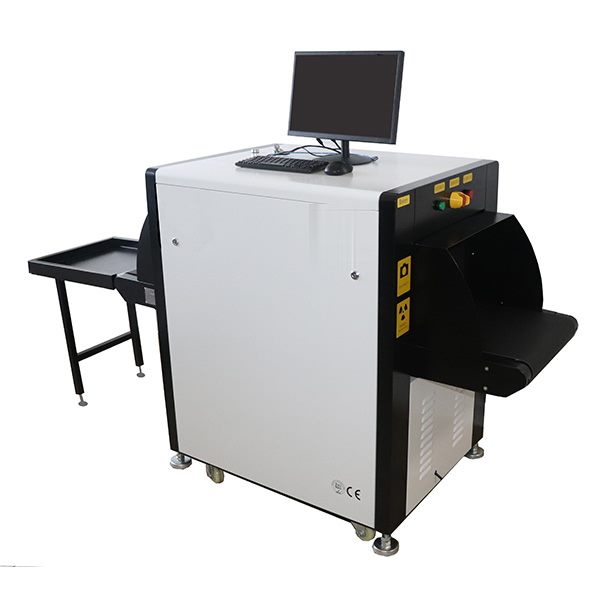
X-Ray Baggage Scanners
Tunnel-type X-ray scanners that inspect luggage, bags and parcels without opening them.
Details and site survey request →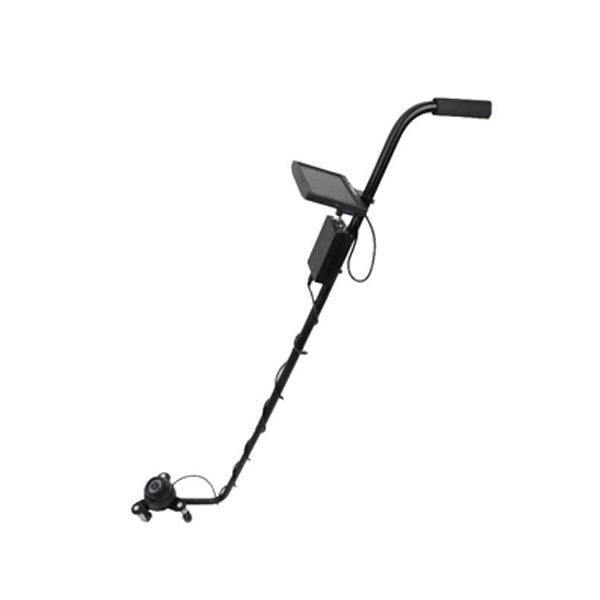
Under-Vehicle Inspection Systems
Rechargeable under-vehicle inspection devices with camera and screen.
Details and site survey request →Why Are Security Screening Systems Built in Layers?
Security screening systems are equipment that prevents weapons, sharp objects or prohibited items from being brought into a building, facility or event venue by checking the people entering, the items they carry and their vehicles. Strong entry security does not rely on a single device; it is built from layers that cover each other's gaps. While a pedestrian walks through a metal detector, their bag is inspected in the X-ray tunnel; for vehicles, both the underside and the interior are checked. Below, we place the equipment in this category side by side and summarise what is needed at which entrance.
The Basic Elements of a Checkpoint
- People screening: A walk-through metal detector detects metal objects carried on the body during passage; the zone that triggered the alarm is checked precisely with a hand-held detector.
- Baggage screening: Bags, suitcases and parcels are imaged in the X-ray scanner without being opened.
- Vehicle screening: The underside of the chassis is inspected with a camera-based imaging system or an inspection mirror.
- Physical barriers: Measures such as barriers that stop the vehicle until the inspection is complete.
- Trained staff: The success of the equipment depends on the officer who interprets the results correctly; no device is sufficient on its own.
Security Screening Systems Compared
| Equipment | What it checks | Commonly used in |
|---|---|---|
| Walk-through metal detector | Metal objects carried by a person | Building and event entrances |
| Hand-held metal detector | Close check of the zone that triggered an alarm | A complement to the walk-through detector at every entrance |
| X-ray baggage scanner | Contents of packages, parcels, suitcases and bags | Cargo centres, shopping malls, office towers, courthouses and hospitals |
| Under-vehicle inspection mirror | Vehicle underside; a simple method requiring no power | Entrances with light vehicle traffic |
| Under-vehicle imaging system | Vehicle underside; camera-based, with a recording option | Public buildings, factories, VIP points and busy vehicle entrances |
Detectors and X-ray together at pedestrian entrances
In buildings with heavy visitor traffic, the most common layout places a walk-through metal detector next to an X-ray baggage scanner. While the person walks through the detector, their belongings are scanned on the conveyor; because the two checks run simultaneously, queues are shorter. The tunnel size of the X-ray scanner is determined by the largest item to be scanned.
Camera or mirror at vehicle entrances
At vehicle entrances, camera-based under-vehicle imaging offers a clearer inspection thanks to its night-vision camera and screen; with recording models, inspections can be documented. At points with sparse vehicle traffic, an under-vehicle inspection mirror is an economical and practical starting option.
Example layouts by type of institution
Office towers and business centres: A walk-through metal detector is placed at the main entrance with a small-tunnel X-ray scanner beside it; the officer carries a hand-held detector. At the car park entrance, under-vehicle inspection is carried out with a mirror or camera.
Courthouses, hospitals and public buildings: Due to heavy visitor traffic, several detector lanes and an X-ray scanner with a medium-sized tunnel are needed; at vehicle gates, an imaging system with recording is preferred.
Cargo and logistics centres: A wide-tunnel X-ray scanner chosen according to parcel size, plus under-vehicle inspection at the facility's vehicle gate.
Event and concert venues: At entrances where many people are admitted in a short time, several parallel detector lanes are set up, officers use hand-held detectors and bags are scanned in the X-ray scanner.
Steps to Choose the Right Equipment for Your Needs
- Define what needs to be checked: people, items, vehicles or all of them.
- Estimate the number of people and vehicles passing through the entrance at peak hours.
- Measure the largest item that needs to be scanned.
- Review the space allocated for the checkpoint, the power infrastructure and how people will flow.
- Decide whether image recording or reporting is required.
- Clarify how many officers will work and the training plan.
- For X-ray scanners, review the dose values documented by the manufacturer, and confirm the licensing conditions for installation and use with the relevant authority.
Installation and Training Process
During the free site survey within Istanbul, the checkpoint is inspected on site; device positions, pedestrian and vehicle flow, power lines and the route for moving equipment inside the building are determined. The X-ray scanner and walk-through detector are positioned and adjusted, and sensitivity and software settings are completed. As under-vehicle imaging devices are portable, their use is demonstrated at handover. In the final stage, test scans are carried out and operators are trained. The installation scope is defined specifically for each project.
Factors That Affect Security Screening System Prices
- How many checkpoints will be set up and which devices will be combined
- Tunnel size and imaging features of the X-ray scanner
- Number of zones and other features of the metal detector
- Model type and recording feature of under-vehicle systems
- Transport, positioning and site preparation
- Maintenance plan and operator training
Let's Plan the Right Layers for Your Entrance
Sensör Software handles the sales, installation and servicing of security screening systems from Perpa Ticaret Merkezi (Şişli), Istanbul. With more than 25 years of field experience, we work with you to determine the device combination that suits your entrance, and we ship products to all 81 provinces. For a quote, you can fill in the form or send us details about your checkpoint via WhatsApp.
Systems used alongside these
Frequently asked questions about Security Screening Systems
Does a walk-through metal detector emit radiation?
No. These devices do not use X-rays; they detect metal with a weak electromagnetic field. Detailed safety information can be found in the product documentation.
How does a walk-through metal detector work?
Coils in the panels create an electromagnetic field; when a metal object disturbs this field, the alarm sounds and zone lights show where the metal is.
Can the sensitivity be adjusted?
Yes. Zone and sensitivity settings can be changed so that small metal items such as belt buckles or keys do not cause unnecessary alarms.
Is walking through a metal detector harmful to health?
These devices do not use X-rays; they detect metal with a low-intensity electromagnetic field. For special cases, such as people with implanted medical devices, the manufacturer's documentation should be followed and the screening procedure arranged accordingly.
Request a quote for your project
Send us the number of doors / access points, the number of staff and your address, and we will call you to arrange a site survey and quotation.